Three Teams, Three Numbers
Ask marketing, sales, and finance for the same revenue number and you get three answers. This lower-friction diagnostic maps where the definitions fork, which systems can be trusted, and what needs to change first so leadership can stop debating the number and start using it. When the same disagreement will feed an AI assistant or board-ready agent, the question becomes sharper: which metric would the machine answer wrong?
Walk into the next leadership meeting with a metric map instead of a shrug
- A visual map of the systems and definitions touching your revenue number
- A clear explanation of where marketing, sales, and finance diverge
- A prioritized list of the first metrics to standardize
- A practical path into a metric-certification sprint, Data Foundation, or Revenue Analytics implementation
- An agent-readiness overlay that shows which board metrics your AI or copilot would answer incorrectly until definitions are certified
This is for you if...
- Your teams use different definitions for pipeline, revenue, or qualified opportunities
- You are expected to be the source of truth, but the source systems disagree
- Your last dashboard project created more rigidity than trust
- You need a fixed-fee way to make the problem visible before you push a bigger fix
This isn't the right fit if...
- You want a dashboard redesign without changing definitions
- You need a full ERP or CRM implementation
- Leadership is unwilling to look directly at the conflicting logic across teams
What you get
Metric map
A visual model of where core revenue definitions split across systems and teams.
Trust assessment
Which numbers are dependable, which are duct tape, and which should stop being used immediately.
Fix sequence
A short, prioritized plan for the first definitions, models, and governance rules to standardize before the number feeds dashboards, copilots, or AI agents.
Implementation path
A clear handoff into Revenue Analytics, Data Foundation, or a GTM metric-certification and governance sprint, depending on the real bottleneck. If the diagnostic rolls into build work, the diagnostic scope becomes the scoping artifact instead of a throwaway discovery deck.
Agent-readiness overlay
A plain-English readout of which board metrics an AI assistant, RAG workflow, or reporting agent would answer wrong until the definition, owner, and source path are certified. The output is the judgment layer that decides what the machine is allowed to answer from — not custom agent plumbing.
How It Works
Collect
We gather the reports, definitions, and systems each team is using to answer the same revenue questions.
Compare
We isolate where terms, joins, ownership, and workflow handoffs begin to diverge.
Map
We turn the disagreement into a visible metric map leadership can understand quickly.
Prioritize
You leave knowing which 2-3 metrics to standardize first and which fixes matter most to executive trust.
Not ready to book yet?
Get the framework we use before we touch metric definitions
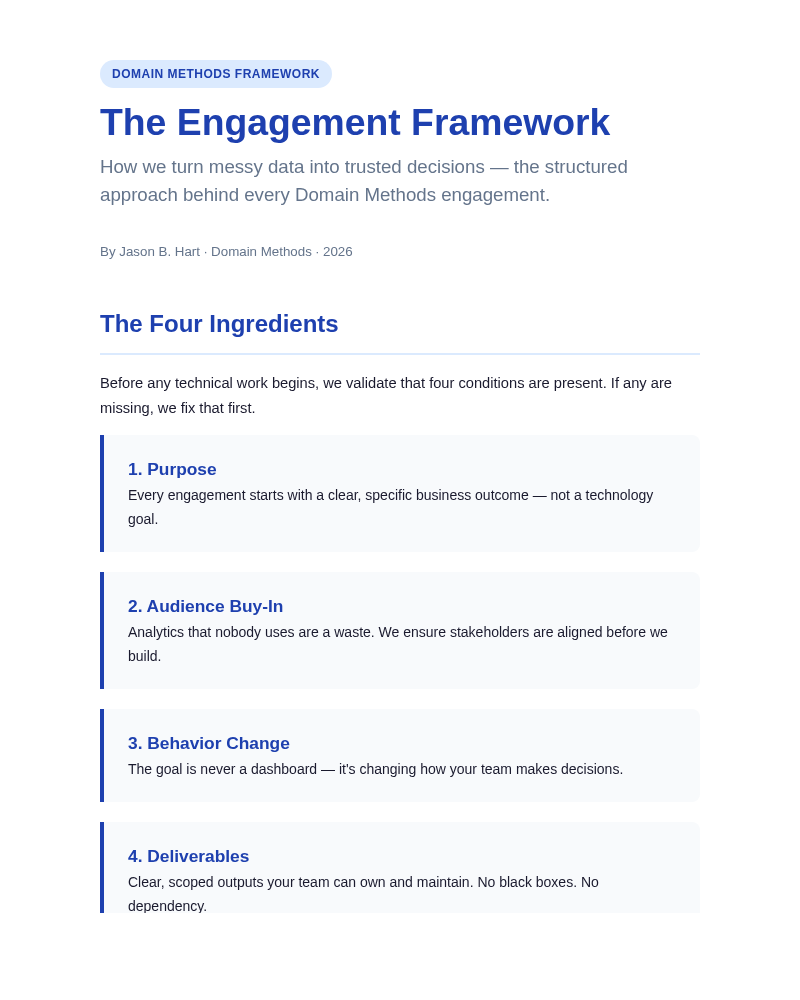
When marketing, sales, and finance disagree on the number, the problem is almost never one bad formula. It is a combination of ownership gaps, definition drift, and system mismatches. This framework shows how we sort that out before anyone starts rebuilding dashboards.
- How we identify whether the mismatch is a definition problem, a system problem, or a people problem
- The operating questions we ask before recommending metric governance versus a data foundation fix
- A practical way to get three teams looking at the same number without launching a six-month project
Instant download. No email required.
Want future posts like this in your inbox?
This form signs you up for the newsletter. It does not unlock the download above.
Where this usually leads
Mid-Market SaaS Company
Marketing and finance finally shared the same attribution and revenue picture
Marketing and finance had been arguing over attribution for quarters. We built reporting that connected campaign spend to closed-won revenue in terms both teams trusted — the metric debate stopped.
Read case studyFast-Growing Fintech Startup
Twelve scattered tools became one trusted warehouse
Twelve SaaS tools, zero agreement on the numbers. We consolidated everything into one warehouse with tested models so leadership could stop reconciling spreadsheets.
Read case studyReady to move up the ladder?
Need to certify the metric, not just find the mismatch?
If this diagnostic proves the mismatch is structural — different systems, different definitions, different incentives — the next rung is a metric-certification sprint, Data Foundation repair, or Revenue Analytics build so every team and every AI-assisted answer works from one governed number.
Explore Data FoundationNot ready to book yet?
Start with the metric-governance tools
Use these worksheets when the immediate job is to make the disputed number visible before you book a diagnostic.
Go deeper on the build path
If the diagnostic shows that the disagreement is structural, the next move is usually a metric-certification sprint, a Data Foundation repair, or Revenue Analytics implementation — not another dashboard argument.
See Data FoundationRelated Reading
- Revenue Definition Confidence Benchmark
- GTM Handshake Benchmark Worksheet
- Revenue Forecast Confidence Check
- Revenue Bridge Confidence Check
- Investor Diligence Metric Readiness Checklist
- Wrong Metric Definition Risk Review
- Pipeline Coverage Confidence Check
- Decision Surface Discussion Aid
- Executive Answerability Benchmark
Common questions before booking this diagnostic
Do you need every team to agree before the project starts?
What does the team actually receive at the end?
Is this still useful if the problem is really governance, not dashboards?
What happens if we need more than a diagnostic?
Can this show which metrics an AI agent would answer wrong?
If every team has its own number, start here
This is the fastest way to turn a vague trust problem into a visible systems-and-definitions problem you can actually solve.
Book a Discovery Call