Proof, not just positioning

Case studies for buyers who need to know whether Domain Methods has fixed this kind of mess before

This page is built for the moment after the team admits the data problem is real but before anyone agrees on the next move. Start with the situation that sounds most like yours. Each path points to real client work, then to the diagnostic or service line that usually fits when the same kind of trust break shows up in your business.

We prove two things — that the data foundation below your AI is trustworthy, and that the decisions above it are measurably better.

These case studies are here to answer a simple question: have we seen this kind of problem before, and what changed when it got fixed?

If you are a VP or director trying to figure out whether the issue is attribution, definitions, infrastructure, workflow design, or all of the above, start with the proof path that sounds closest to your current mess. That will get you to the right next step faster than reading the archive like a blog feed.

Start with the proof path that matches the ladder

The fastest way to decide whether we are a fit is usually not reading every case study. It is finding the proof path that matches the current rung: Diagnose the trust break, Build the governed system or model, then Run the measurement cadence so it stays true.

Attribution and revenue trust

When marketing, finance, and leadership all have a different answer for what is driving revenue

This usually shows up as budget debates that go nowhere. Ad platforms claim wins. CRM numbers tell a different story. Finance still does not trust the spend-to-revenue picture.

What usually matters in the field

The real problem is usually not one bad dashboard. It is a missing bridge between channel data, CRM stages, and the revenue definition leadership will actually defend.

Relevant proof

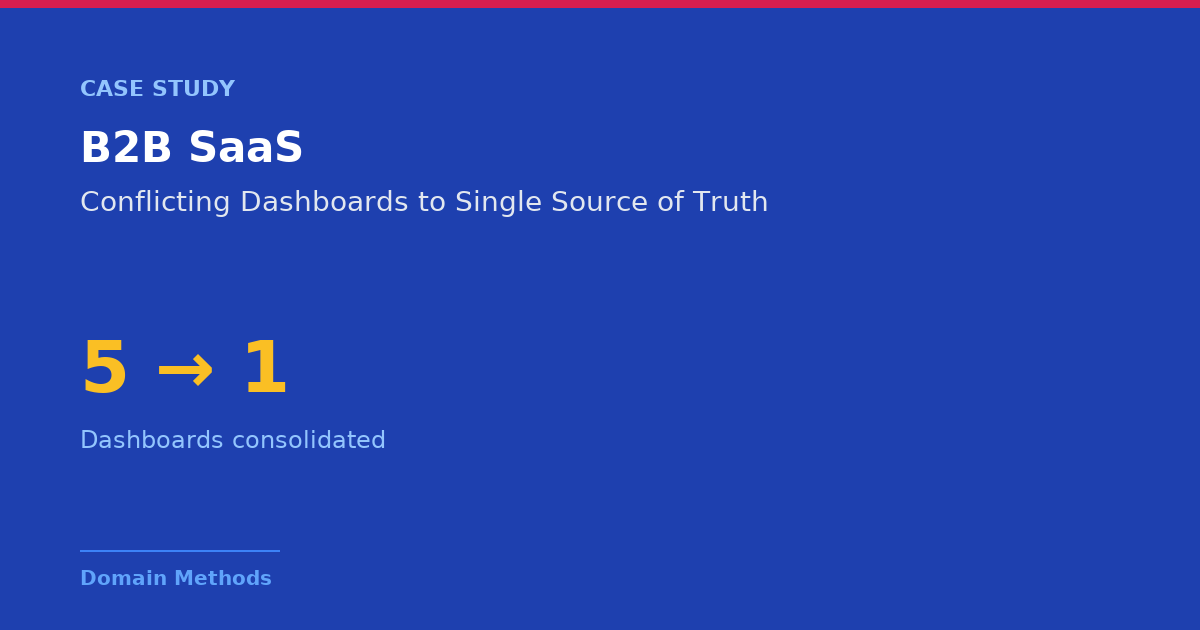
B2B SaaS: from conflicting dashboards to one trusted attribution pipeline

A 300-person SaaS growth team stopped arguing over five dashboards and started reallocating spend within the same week.

Read case study

Mid-market SaaS: closing the attribution gap from 60% to 95%

A leadership team got board-grade coverage instead of another quarter of channel guesswork.

Read case study

Best first step

Where Did the Money Go?

Start here if you need the fast diagnostic before the next board meeting or budget reset.

See the spend diagnostic

Broader path

SaaS Marketing Attribution

Use the dedicated attribution service path when the proof you need is campaign, funnel, and pipeline confidence rather than a broader reporting rebuild.

Explore SaaS attribution

RevOps and revenue operating rules

When sales, marketing, finance, and RevOps cannot agree on the rules behind the revenue number

This is the pattern where the pipeline report, CRM handoff, attribution view, and finance version of revenue all sound reasonable on their own, but none of them can settle the operating argument.

What usually matters in the field

The fix usually starts with a few hard rules: which system wins, what sales can act on, what finance will recognize, and which handoffs need owners before the metric touches compensation or board reporting.

Relevant proof

B2B SaaS: AI lead scoring increased sales efficiency 40%

Product-qualified signals became a sales handoff that reps could trust because the scoring rules, CRM routing, and follow-up workflow were made explicit.

Read case study

B2B SaaS: from conflicting dashboards to one trusted attribution pipeline

Marketing, finance, and leadership moved from competing reports to one spend-to-revenue view they could use in operating decisions.

Read case study

Best first step

RevOps Consulting

Start here if the revenue problem is really an operating-rules problem across CRM handoffs, funnel definitions, and reporting ownership.

Explore RevOps consulting

Broader path

Three Teams, Three Numbers

Use the revenue-definition diagnostic when the first problem is getting sales, marketing, and finance to agree on the number before anyone builds more reporting.

See the revenue definition diagnostic

Data foundation and reliability

When the stack keeps producing work, but not trust

This is the pattern where the warehouse exists, dbt exists, dashboards exist, and the business still treats every important metric like it needs a side conversation.

What usually matters in the field

What usually breaks first is not tooling coverage. It is identity resolution, definition discipline, testing, and a handoff model the business can actually live with.

Relevant proof

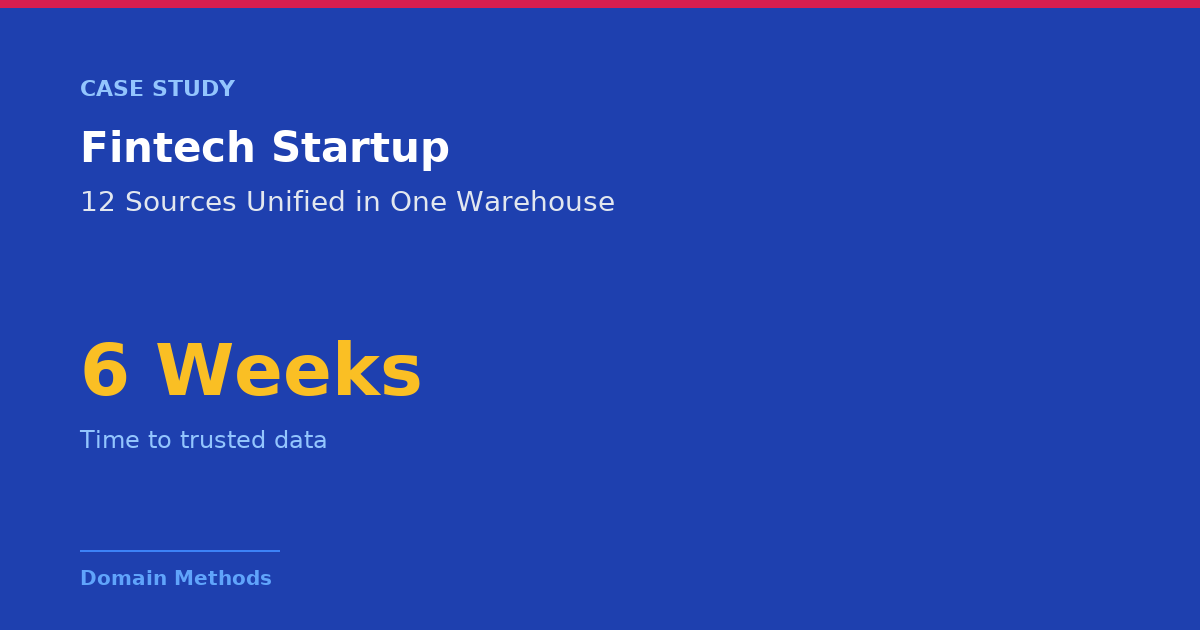
Fintech startup: 12 data sources unified into one trusted warehouse

Board-deck prep dropped from two days to twenty minutes once the warehouse and metric definitions finally matched reality.

Read case study

Mid-market SaaS: from pipeline firefighting to 99%+ uptime

A data team stopped spending every week on break-fix work and got back to analysis that leadership could use.

Read case study

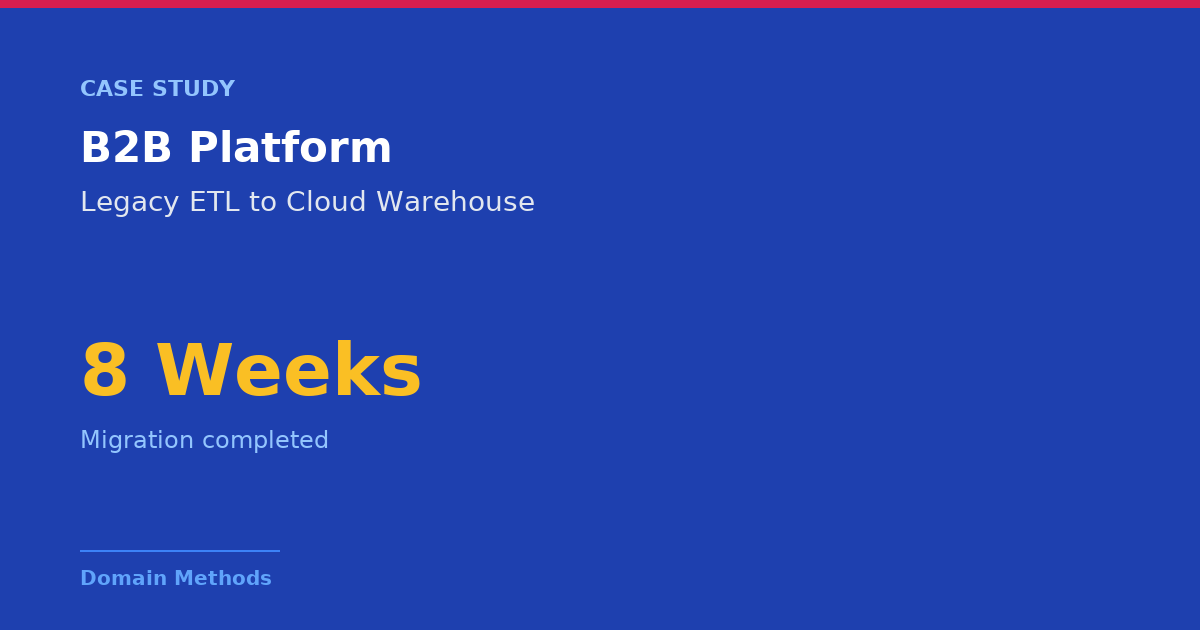
B2B platform: legacy ETL to modern cloud warehouse in 8 weeks

A migration succeeded because the business logic and operating constraints were carried over instead of hand-waved away.

Read case study

Best first step

Translate the Ask

Start here if the business knows something is broken but nobody has translated that into a buildable plan yet.

See the translation sprint

Broader path

Data Foundation

Use the broader service path when the warehouse, modeling, testing, and governance work need to be rebuilt as one system.

Explore data foundation

AI readiness and workflow risk

When AI pressure is forcing decisions before the data and workflow rules are ready

This is the pattern where leaders want AI-assisted scoring, routing, personalization, or recommendations, but the CRM, warehouse, and operating handoff still contain enough ambiguity to make automation risky.

What usually matters in the field

The useful question is not whether the company can launch an AI pilot. It is whether the source fields, ownership rules, exception paths, and measurement loop are strong enough for the workflow to change real customer or revenue motion.

Relevant proof

B2B SaaS: AI lead scoring increased sales efficiency 40%

A scoring model became usable because the routing logic, CRM handoff, and sales follow-up rules were made explicit before the team asked reps to trust it.

Read case study

PLG SaaS: churn-risk activation shipped into HubSpot in 3 weeks

A warehouse signal became a daily workflow only after the team defined which accounts to act on, when to suppress action, and how to watch the outcome.

Read case study

Fintech startup: 12 scattered sources unified before leadership reporting

The foundation work showed why AI-ready systems still need boring source precedence, identity, and definition work before the output is trusted.

Read case study

Best first step

AI-Ready Data Diagnostic

Start here if AI pressure is exposing CRM hygiene, source trust, workflow ownership, or measurement gaps before the team automates more work.

See the AI-ready diagnostic

Broader path

Data Foundation

Use the foundation path when the diagnostic exposes source precedence, warehouse, identity, testing, or governance work that has to be fixed first.

Explore data foundation

Fractional analytics and senior judgment

When the company needs senior analytics help before the full-time role is obvious

This is the moment where leadership knows analytics is slowing decisions down, but the work still mixes reporting trust, source-data repair, stakeholder translation, and hiring questions.

What usually matters in the field

A fractional analytics path works best when the team needs judgment and sequencing first, not another task list handed to a freelancer without the authority to challenge scope.

Relevant proof

Fintech startup: senior analytics sequencing across 12 scattered sources

The first win was not a prettier dashboard. It was deciding which sources and definitions had to be trusted before leadership could move faster.

Read case study

Mid-market SaaS: freeing the data team from weekly pipeline firefighting

The engagement created enough reliability and operating ownership for the team to get back to work that mattered instead of heroics.

Read case study

Best first step

Fractional Analytics Consultant

Start here if you need senior analytics judgment, scoping, and execution support before hiring full time or choosing a larger service path.

Explore fractional analytics help

Broader path

Data Foundation

Use the broader foundation path when the fractional scoping work exposes source precedence, warehouse, testing, or governance problems that need a rebuild.

Explore data foundation

Activation and operational workflows

When useful data exists in the warehouse but never reaches the team who has to act on it

This is the common trap where the data team already did the hard modeling work, but customer success, sales, or lifecycle still runs on gut feel because the signal never lands inside the workflow.

What usually matters in the field

The technical work is often not the bottleneck. The bottleneck is choosing one high-value workflow, wiring the right signal into the right system, and making the operating handoff real.

Relevant proof

PLG SaaS: reverse ETL workflow shipped in 3 weeks, 18% directional churn reduction

A churn model stopped living in a dashboard and started driving daily action in HubSpot.

Read case study

B2B SaaS: AI lead scoring increased sales efficiency 40%

Product and CRM signals turned into a practical prioritization workflow instead of another scoring experiment nobody used.

Read case study

Ecommerce SaaS: warehouse-as-CDP replaced a $120K/year vendor tool

The team moved from expensive tooling dependence to warehouse-native activation with more control.

Read case study

Best first step

The $500K Question

Start here if the team knows there is signal in the data but is not sure which workflow is worth betting the quarter on.

See the growth-leverage diagnostic

Broader path

Data Activation

Use the broader service path when the activation pattern is clear and the team needs the workflow built, shipped, and operationalized.

Explore data activation

Managed Run and measurement

When the build is working, but leadership still needs the numbers certified every month

This is the pattern where the first implementation is not enough. The company needs recurring checks on metric definitions, pipeline reliability, model performance, and whether the decisions above the data are actually improving.

What usually matters in the field

Managed Run works only when it stays honest: reliability stays monitored, lift is labeled correctly, and quarterly re-certification catches drift before dashboards, board reports, or AI workflows start sounding confident about the wrong thing.

Relevant proof

Mid-market SaaS: metric certification and 99%+ pipeline uptime

A broken churn script exposed why reliability has to become a managed baseline, not a one-time migration milestone.

Read case study

B2B SaaS: predictive PQL scoring, proven with a holdout

A model became useful because the handoff, measurement readout, and operating rules were explicit enough for sales to act on.

Read case study

Best first step

Managed Run + Measure

Use this when the team has already earned the right to keep a critical metric, model, or workflow under recurring measurement discipline.

See Managed Run + Measure

Broader path

Predictive GTM Models with Lift Proof

Use the build path when the next step is still proving a model, recommendation, or growth workflow before it enters recurring operations.

Explore predictive GTM models

Ecommerce profitability clarity

When revenue looks healthy until margin, fulfillment, and channel economics enter the conversation

This is the situation where the top-line story sounds fine in Shopify and ad platforms, but the actual profit picture changes once returns, discounts, shipping, and blended acquisition costs show up.

What usually matters in the field

The important move is getting from channel vanity metrics to a version of performance the operator can actually use to change spend, inventory, or merchandising decisions.

Relevant proof

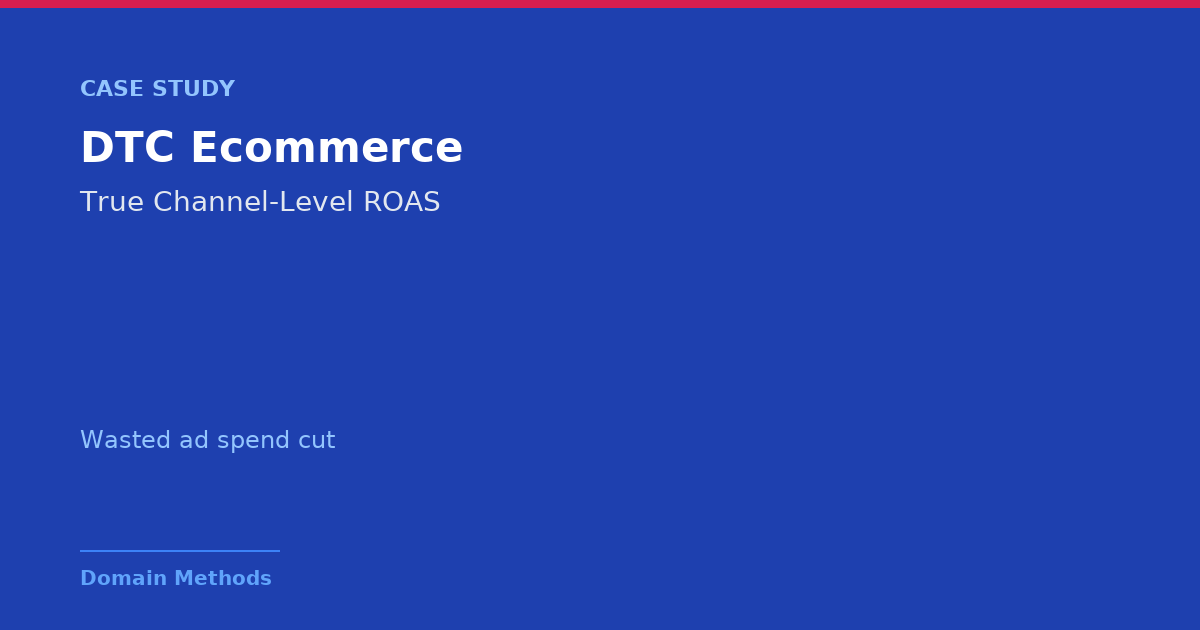
DTC ecommerce: cut wasted ad spend 35% with true channel-level ROAS

A brand stopped trusting platform-reported wins and started reallocating budget based on real downstream outcomes.

Read case study

Ecommerce SaaS: warehouse-as-CDP replaced a $120K/year vendor tool

A warehouse-native operating model created more flexibility once customer and channel data were finally usable together.

Read case study

Best first step

Show Me the Margin

Start here if leadership still cannot see which channels, products, or segments are actually profitable.

See the profitability diagnostic

Broader path

Revenue Analytics

Use the broader service path when the profitability and performance model needs to hold up across finance, marketing, and operations.

See the revenue analytics path

Browse the full case study archive

If you already know the kind of problem you are solving, the full archive is below.

Diagnostic proof

Diagnose the trust break

Use these when the first move is finding the source of conflicting numbers before budget or board decisions move.

Case Studies
Diagnostic Measurement above AI

DTC Ecommerce: Cut Wasted Ad Spend 35% with True Channel-Level ROAS

Channel economics confidence

How a venture-backed DTC brand spending $120K/month on ads unified attribution across Meta, Google, and TikTok — and cut blended CAC by over a third.

Read case study

Case Studies
Diagnostic Measurement above AI

Mid-Market SaaS: Closing the Attribution Gap from 60% to 95%

Board-grade attribution coverage

How a mid-market SaaS company closed the attribution gap from 60% to 95% spend-to-revenue coverage — and earned board-level trust.

Read case study
Case Studies
Diagnostic Measurement above AI

B2B SaaS: From Conflicting Dashboards to a Single Source of Truth

Spend-to-revenue trust

How a 300-person B2B SaaS team replaced five conflicting dashboards with one trusted attribution pipeline for faster budget decisions.

Read case study

Build proof

Build the governed system or model

Use these when the team needs an implementation path: governed data, activation workflows, or model proof.

Case Studies
Build Data foundation below AI

B2B Platform: Informatica to Fivetran, BigQuery, and dbt in 8 Weeks

Warehouse migration with tested logic

How a B2B platform replaced Informatica with Fivetran, BigQuery, and dbt while preserving business logic and adding data quality tests.

Read case study
Case Studies
Build Measurement above AI

PLG SaaS: Reverse ETL Workflow Shipped in 3 Weeks, 18% Directional Churn Reduction

Activation workflow measurement

How a PLG SaaS team activated warehouse churn-risk scores in 3 weeks and saw an 18% directional churn reduction in one quarter.

Read case study
Case Studies
Build Data foundation below AI

Fintech Startup: 12 Data Sources Unified Into One Trusted Warehouse in 6 Weeks

Source-of-truth repair

How a Series A fintech startup consolidated data from 12 SaaS tools into BigQuery and dbt, replacing spreadsheet chaos with trusted reporting.

Read case study
Case Studies
Build Data foundation below AI

Ecommerce SaaS: Warehouse-as-CDP Replaced a $120K/Year Vendor Tool

Warehouse-native activation

How a mid-market ecommerce SaaS replaced an expensive CDP with a warehouse-native reverse ETL approach, cutting costs 80% and gaining flexibility.

Read case study
Case Studies
Build Measurement above AI

B2B SaaS: Predictive PQL Scoring, Proven With a Holdout

Predictive GTM models with lift proof

How a PLG B2B SaaS company used predictive PQL scoring, CRM handoffs, and holdout discipline to prioritize trial accounts and increase qualified pipeline 40%.

Read case study

Managed Run proof

Run the measurement cadence

Use these when the win is keeping critical metrics, models, and operating readouts certified after the first build ships.

Case Studies
Managed Run Data foundation below AI

Mid-Market SaaS: Metric Certification and 99%+ Pipeline Uptime

Metric certification and reliability

How a 200-person SaaS data team turned broken churn logic and fragile pipelines into certified, owner-backed metrics with 99%+ reliability.

Read case study

Common questions before you use the case studies

Which case study should I read first?

Start with the proof path that matches the argument already happening inside your company. If the fight is about paid spend or pipeline source, start with attribution. If sales, marketing, finance, and RevOps disagree on the rules behind the revenue number, start with the RevOps path. If every leadership number needs a reconciliation meeting, start with data foundation. If AI pressure is exposing CRM hygiene, source trust, workflow ownership, or measurement gaps, start with AI readiness. If the company needs senior analytics judgment before the role or service path is obvious, start with fractional analytics. If the modeled signal exists but nobody acts on it, start with activation. If the build is working but the metric, model, or workflow needs recurring proof, start with Managed Run. If top-line ecommerce revenue hides margin problems, start with profitability.

Do these examples only apply to SaaS companies?

Most Domain Methods work is built around mid-size SaaS teams, but the same trust problem shows up in SaaS-adjacent ecommerce when marketing, finance, and operations cannot agree on what revenue, margin, or channel performance actually means.

What if our problem touches more than one proof path?

That is common. Attribution work often exposes definition problems, and AI or activation work often exposes source-data issues first. Use the closest proof path to name the current pain, then use the matching diagnostic or service path on this page to decide whether the first move is a quick trust reset or a deeper foundation build.

Are the case studies meant to be a menu of fixed packages?

No. They are evidence of patterns Domain Methods has already worked through: messy attribution, conflicting revenue definitions, brittle foundations, senior analytics capacity gaps, unused warehouse data, recurring measurement discipline, and unclear ecommerce margin. The engagement shape still depends on the decision your team needs to make next and how much of the upstream system has to change before that decision can be trusted.

Not sure which proof path fits your situation?

If you can describe where the trust breaks down, we can usually tell pretty quickly whether you need an attribution diagnostic, a translation sprint, fractional analytics help, a profitability reset, or a broader implementation path.

Book a Discovery Call