The Marketing Data Stack Anatomy: What Breaks, Where, and Why
- Jason B. Hart
- Marketing analytics
- April 8, 2026
Table of Contents
What is the marketing data stack anatomy?
The marketing data stack anatomy is a practical map of the five layers that turn raw marketing and revenue data into decisions leaders can actually trust: collection, integration, governance, analysis, and action.
I call it an anatomy on purpose.
A lot of B2B content turns this topic into a pyramid. That format usually implies you finish one layer, graduate to the next, and live happily ever after.
That is not how this works in real companies.
A mid-size SaaS team can have dashboards, warehouse tables, and fancy activation tools all running at once while the whole system is still fragile. The problem is not that one layer is missing. The problem is that one weak layer can poison everything downstream.
That is why the better question is not “what tools do we use?”
It is:
Which layer is actually broken, and what is that break costing us downstream?
If you can answer that honestly, you stop buying random software and start fixing the operating problem.
Why this matters
Most companies do not lose trust in data because they lack charts.
They lose trust because:
- tracking is inconsistent at the source
- data lands in the warehouse without shared business rules
- definitions live in people’s heads instead of a visible operating model
- dashboards answer different questions with different math
- workflows push numbers into CRM, lifecycle, or finance systems without enough confidence behind them
By the time leadership notices the problem, it usually looks like a reporting problem.
But the dashboard is often just where the damage becomes visible.
The anatomy in one view
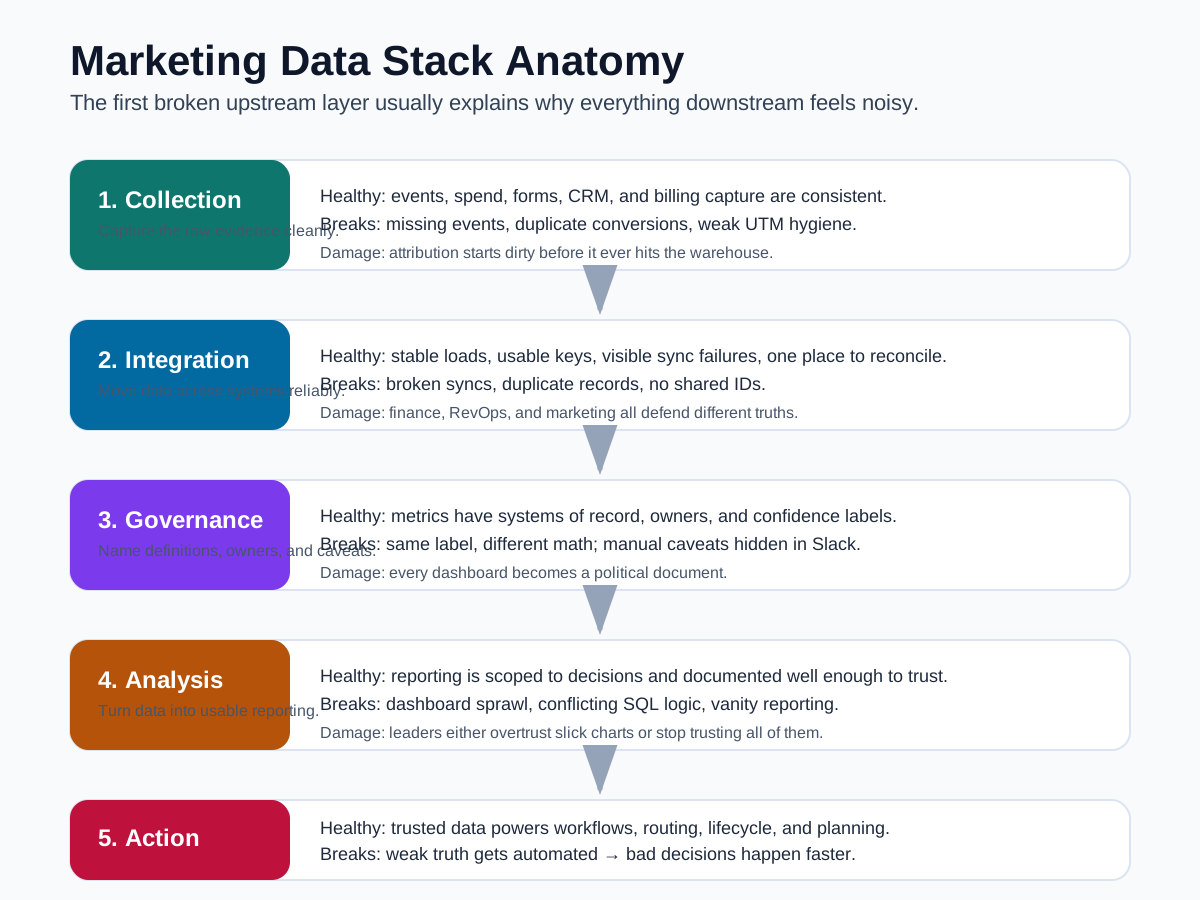
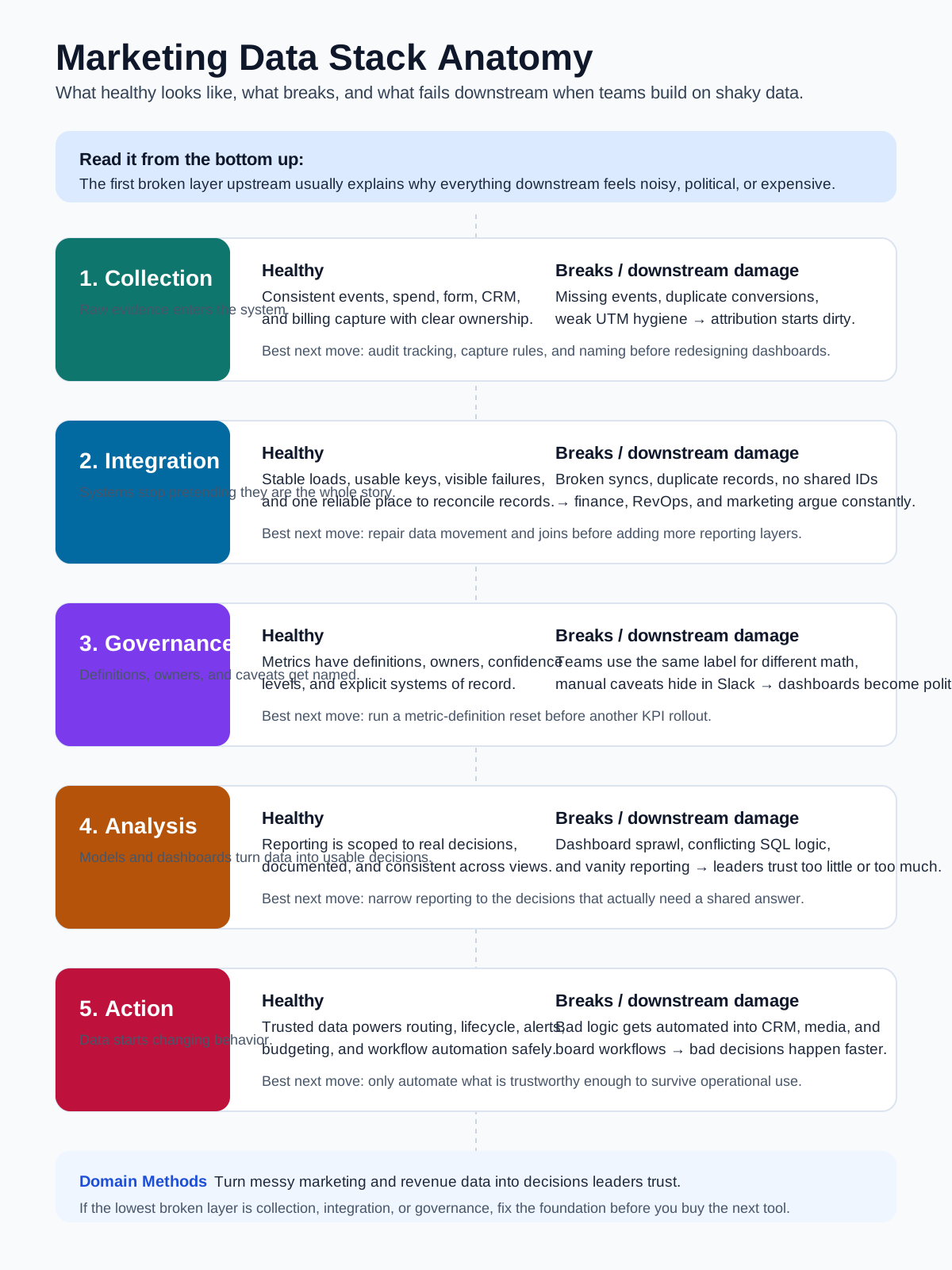
If you want the one-page version for team review, download the graphic here: Marketing Data Stack Anatomy graphic.
The five layers at a glance
| Layer | What healthy looks like | What usually breaks | What fails downstream | Strong next move |
|---|---|---|---|---|
| Collection | Events, ad spend, forms, CRM changes, and billing data are captured consistently with clear naming and ownership | Missing events, duplicate conversions, inconsistent UTMs, weak source tracking | Channel reporting drifts before it even reaches the warehouse | Audit source tracking and capture rules |
| Integration | Source systems land in one usable environment with stable joins, timestamps, and identifiers | Broken syncs, partial loads, duplicate records, no shared IDs | Finance, RevOps, and marketing argue over whose system is “right” | Rebuild the movement of data before changing dashboards |
| Governance | Definitions, owners, caveats, and approved systems of record are explicit | Metric definitions differ by team, manual adjustments are hidden, nobody owns changes | Every dashboard becomes a political document | Run a metric-definition and ownership reset |
| Analysis | Models and dashboards answer clear business questions with documented logic | Dashboard sprawl, one-off SQL, conflicting business logic, vanity reporting | Leaders stop trusting the story even when some data is correct | Narrow reporting to the decisions that matter most |
| Action | Trusted data powers workflows, segmentation, alerts, budgeting, and planning | Teams push bad or stale data into CRM, paid media, lifecycle, or board reporting | Bad decisions happen faster and look more sophisticated | Only automate where confidence is high enough |
Layer 1: Collection
Collection is where the raw evidence enters the system.
That includes things like:
- ad platform spend and campaign metadata
- web events and form submissions
- product events
- CRM lifecycle changes
- billing and subscription events
- offline sales or finance adjustments that still affect revenue truth
When collection is healthy, the team can answer a boring but important question:
Do we trust that the raw record of what happened is close enough to reality to build on?
What healthy collection looks like
Healthy collection is not perfect instrumentation.
It is:
- consistent naming conventions
- clear event intent
- basic source ownership
- enough documentation that someone can tell whether a data point should exist
- enough QA that broken capture gets noticed early
Common collection failures
The patterns are usually familiar:
- form events fire twice
- campaign naming drifts by team or agency
- CRM source fields get overwritten
- offline conversions never make it back into the reporting layer
- product events exist but nobody trusts the event plan
- ad spend is present but key dimensions are missing or unstable
What breaks downstream when collection fails
When collection fails, every later layer becomes harder than it should be.
That is when you get:
- attribution models arguing over bad inputs
- CRM and marketing automation workflows segmenting the wrong people
- dashboards with impressive formatting and weak source truth
- AI summaries built on event noise instead of buyer reality
This is one reason I do not love the instinct to start with dashboard redesign.
If collection is broken, the chart makeover is just more expensive decoration.
Layer 2: Integration
Integration is where all the separate source systems stop pretending they are the whole story.
This layer answers questions like:
- can we join spend to pipeline?
- can we reconcile CRM changes to billing reality?
- can we connect lifecycle events to product usage?
- can we trust that the warehouse is receiving complete, timely data?
What healthy integration looks like
Healthy integration means:
- source systems land in one reliable environment
- keys and timestamps are usable enough to join records across systems
- ingestion failures are visible
- duplicate handling is intentional
- teams know which system is authoritative for which slice of the story
That does not require a glamorous stack.
It requires disciplined movement of data.
Common integration failures
This layer breaks when teams have:
- too many silent scripts doing critical glue work
- connector output treated as business-ready data
- no stable handoff between CRM, billing, and warehouse logic
- long lag times that make yesterday’s report feel current when it is not
- spend data, lead data, and revenue data living in parallel with no trustworthy bridge between them
What breaks downstream when integration fails
Integration failures create the classic executive argument:
- marketing shows platform success
- RevOps shows CRM numbers
- finance shows booked or recognized revenue
- nobody can prove how the three are supposed to fit together
This is exactly where a lot of mid-size SaaS teams start saying they need a single source of truth.
Usually they do.
But what they really need first is a data movement layer that stops dropping context every time data crosses a system boundary.
Layer 3: Governance
Governance is the layer most teams postpone until they are already tired.
That is a mistake.
Governance is where the company decides:
- what a metric means
- what it does not mean
- which system is the system of record
- who is allowed to change the definition
- how caveats get communicated
Without that layer, you do not have one stack.
You have several teams borrowing the same words for different realities.
What healthy governance looks like
Healthy governance is lighter than most people think.
It usually means:
- a definition record for the metrics that matter most
- named owners
- explicit source-of-truth decisions
- clear confidence labels where the data is still directional
- a review cadence when business logic changes
This is not bureaucracy.
It is what keeps downstream reporting from turning into negotiation theater.
Common governance failures
The usual breakdowns are:
- marketing, RevOps, and finance all use the same label for different calculations
- one dashboard is treated as canonical because it is politically powerful, not because it is right
- manual spreadsheet adjustments are real but undocumented
- caveats live in Slack threads instead of in the reporting logic or definition record
- ownership is assumed until something breaks
What breaks downstream when governance fails
Governance failures create a special kind of chaos because the numbers can all be technically correct and still be commercially useless.
That is when you hear things like:
- “The dashboard is right, but not for that question”
- “Finance is not wrong, but that number is too late for marketing”
- “We all agree the number is messy, but we still need it for the board deck”
That is why this layer often sits at the center of trust work.
If you need one practical reset here, start with a metric-definition workshop before you start another dashboard rebuild.
Layer 4: Analysis
Analysis is where the stack turns into something humans can use.
This is the layer most people mean when they say analytics.
It includes:
- modeled warehouse outputs
- dashboard logic
- KPI definitions in reporting
- the framing of what leaders see every week or month
What healthy analysis looks like
Healthy analysis is not the dashboard with the most tabs.
It is analysis that is:
- scoped to real decisions
- documented enough to survive turnover
- consistent across related views
- honest about confidence and caveats
- small enough that people can still explain how the number was produced
Common analysis failures
Analysis usually breaks through sprawl:
- every team gets its own version of the truth
- SQL logic diverges quietly across dashboards
- reporting answers every possible question badly instead of a few questions well
- stakeholders keep requesting new views because the existing ones do not resolve trust
- the dashboard owner becomes the human API for every number
What breaks downstream when analysis fails
When the analysis layer is weak, the company starts making one of two mistakes:
- it trusts slick reporting too much
- it trusts the entire system too little
Neither outcome is good.
This is why a narrower reporting layer often beats a more ambitious one. If three dashboards can answer the real operating questions cleanly, that is better than twelve dashboards with competing logic and nice visual polish.
Layer 5: Action
Action is the layer a lot of teams want to jump to first.
This is where data changes behavior.
Examples include:
- CRM updates and routing
- lifecycle audiences and nurture triggers
- paid media suppressions or exclusions
- scoring models
- finance or leadership reporting packs
- alerts, QA checks, and operational workflows
What healthy action looks like
Healthy action means the company only automates what it trusts enough to operationalize.
That usually looks like:
- workflows tied to stable definitions
- automation rules with visible owners
- confidence levels attached to the underlying data
- fast rollback when bad logic is discovered
Common action failures
This layer breaks when teams automate on top of weak truth.
That shows up as:
- CRM fields filled with stale or misleading model output
- lifecycle campaigns targeting people based on old warehouse logic
- board reporting automated before confidence is high enough
- AI workflows summarizing contradictions faster than humans can catch them
What breaks downstream when action fails
This is the most expensive failure mode because the bad data stops being just a reporting problem.
It becomes an operating problem.
Now sales routes the wrong leads, finance plans from the wrong trend, marketing optimizes the wrong channels, and leadership spends more time defending the workflow than benefiting from it.
That is why I tend to describe activation as a privilege earned by upstream trust.
If you cannot explain the number, you probably should not automate around it yet.
How to find the first broken layer
A quick diagnostic rule:
- if the disagreement starts with “we never captured that cleanly,” the break is probably collection
- if the disagreement starts with “those systems do not line up,” the break is probably integration
- if the disagreement starts with “we all mean different things by this metric,” the break is probably governance
- if the disagreement starts with “every dashboard says something different,” the break is probably analysis
- if the disagreement starts with “the workflow is running but the result feels wrong,” the break is probably action
That is not perfect.
But it is good enough to stop teams from defaulting to the most visible symptom.
What to fix first when everything feels broken
Sometimes several layers are weak at once.
That is normal.
Use this sequence:
- fix the lowest broken layer that is poisoning the rest
- stabilize the minimum governance needed so the repair sticks
- narrow the analysis layer to the decisions that matter most
- automate only the actions that can tolerate the current confidence level
In practice, that usually means:
- source audit before attribution overhaul
- integration cleanup before dashboard redesign
- definition reset before cross-functional KPI rollout
- reporting simplification before AI activation experiments
That is not glamorous.
It is just how trust actually gets rebuilt.
A practical way to use this with leadership
If you want to use this anatomy in a working session, do not start with tooling.
Start with one painful decision.
Examples:
- We cannot defend spend allocation with confidence.
- Finance and marketing keep bringing different funnel numbers to the same meeting.
- We have a warehouse and dashboards, but nobody trusts the lifecycle audiences built on top of them.
Then ask five questions:
- where does the source evidence originate?
- how does it move across systems?
- who defines the metric and caveats?
- which reporting layer is presenting it?
- what workflow or decision is already acting on it?
You will usually find the break faster that way than by listing software vendors on a slide.
The real mistake teams make
The most common mistake is not buying the wrong tool.
It is trying to solve an upstream trust problem with a downstream layer.
That is how teams end up with:
- a new dashboard instead of a definition reset
- a new CDP instead of integration cleanup
- an AI workflow instead of source QA
- a bigger BI rollout instead of a narrower executive view with explicit caveats
The stack does not need to look sophisticated.
It needs to let the company make decisions faster without secretly increasing the amount of doubt underneath them.
If you are deciding what the next move should be
If the pain is mostly in collection, integration, or governance, start with Data Foundation.
If the pain is mostly about channel trust, spend defense, and revenue reporting drift, start with Where Did the Money Go?.
If the stack is solid enough to support workflows but the business still is not operationalizing warehouse truth, that is when Data Activation starts making sense.
The point is not that every team needs all three.
The point is that the right next move depends on which layer is actually broken.
Bottom line
The marketing data stack is not a software diagram.
It is an operating system for trust.
When one layer breaks, the damage rarely stays in that layer.
So before you buy another platform, launch another dashboard project, or wire AI into a shaky workflow, ask the more useful question:
What layer is broken first, and what is it breaking downstream?
That is the question that usually leads to the right fix.
Download the Marketing Data Stack Anatomy graphic
A one-page flow graphic showing the five stack layers, what healthy looks like, the most common failure modes, and the downstream damage each break creates.
DownloadSee It in Action
Common questions about the marketing data stack
What is the marketing data stack, in plain English?
Which layer usually breaks first?
Can we fix the dashboard first if leadership needs reporting now?
Where does AI fit in this anatomy?

About the author
Jason B. Hart
Founder & Principal Consultant
Founder & Principal Consultant at Domain Methods. Helps mid-size SaaS and ecommerce teams turn messy marketing and revenue data into decisions leaders trust.
Jason B. Hart is the founder of Domain Methods, where he helps mid-size SaaS and ecommerce teams build analytics they can trust and operating systems they can actually use. He has spent the better …
Get posts like this in your inbox
Subscribe for practical analytics insights — no spam, unsubscribe anytime.