The Evidence Threshold Framework for Analytics Investments
- Jason B. Hart
- Revenue Operations
- April 22, 2026
- Updated May 15, 2026
Table of Contents
What is the evidence threshold framework for analytics investments?
The evidence threshold framework is a practical way to decide how much proof is enough for the next analytics move.
That sounds basic until you sit in the meeting where someone says one of these things:
- “We need a full rebuild before we touch this.”
- “Can we just buy the tool and get moving?”
- “I know the numbers are messy, but I cannot take this budget ask upstairs yet.”
Those are not the same decision.
They should not require the same level of proof.
A lot of mid-size SaaS teams get stuck because they treat every analytics investment like it needs to survive the exact same approval gate. That is how a reasonable translation sprint gets held to board-pack standards, and how a six-figure implementation ask gets justified with nothing more than a few annoyed Slack threads and a vague feeling that reporting is bad.
If you want the later-stage article for packaging a bigger ask, read The Internal Business Case Builder. This piece comes earlier. It is about whether the case is mature enough for that step at all.
Why teams keep using the wrong proof standard
Most analytics investment fights are not really about whether the problem exists.
They are about whether the room agrees what kind of decision is on the table.
That is the operator-level failure mode.
One leader thinks the team is only asking for a translation sprint to clarify the request and stop the argument. Another hears a warehouse rebuild. A third hears new tooling. The data team hears one more round of reporting cleanup with no owner.
Once that happens, the proof debate gets distorted.
The room starts asking for evidence that belongs to a different decision.
You see it in patterns like these:
- a VP wants CFO-grade ROI math before approving a two-week scoping sprint
- a team buys software because the metric pain is visible, even though the ownership path is still fuzzy
- a data lead keeps showing screenshots of broken dashboards when the real gap is a named operating decision
- leadership asks for one giant business case when the honest next move is still a narrower working session on definitions and thresholds
That is why this framework matters.
It gives the team a way to say, “We do have enough proof for something, but not necessarily for the biggest version of the ask.”
The framework at a glance
Use the framework to classify the proof you already have before you turn reporting pain into a bigger funding conversation.
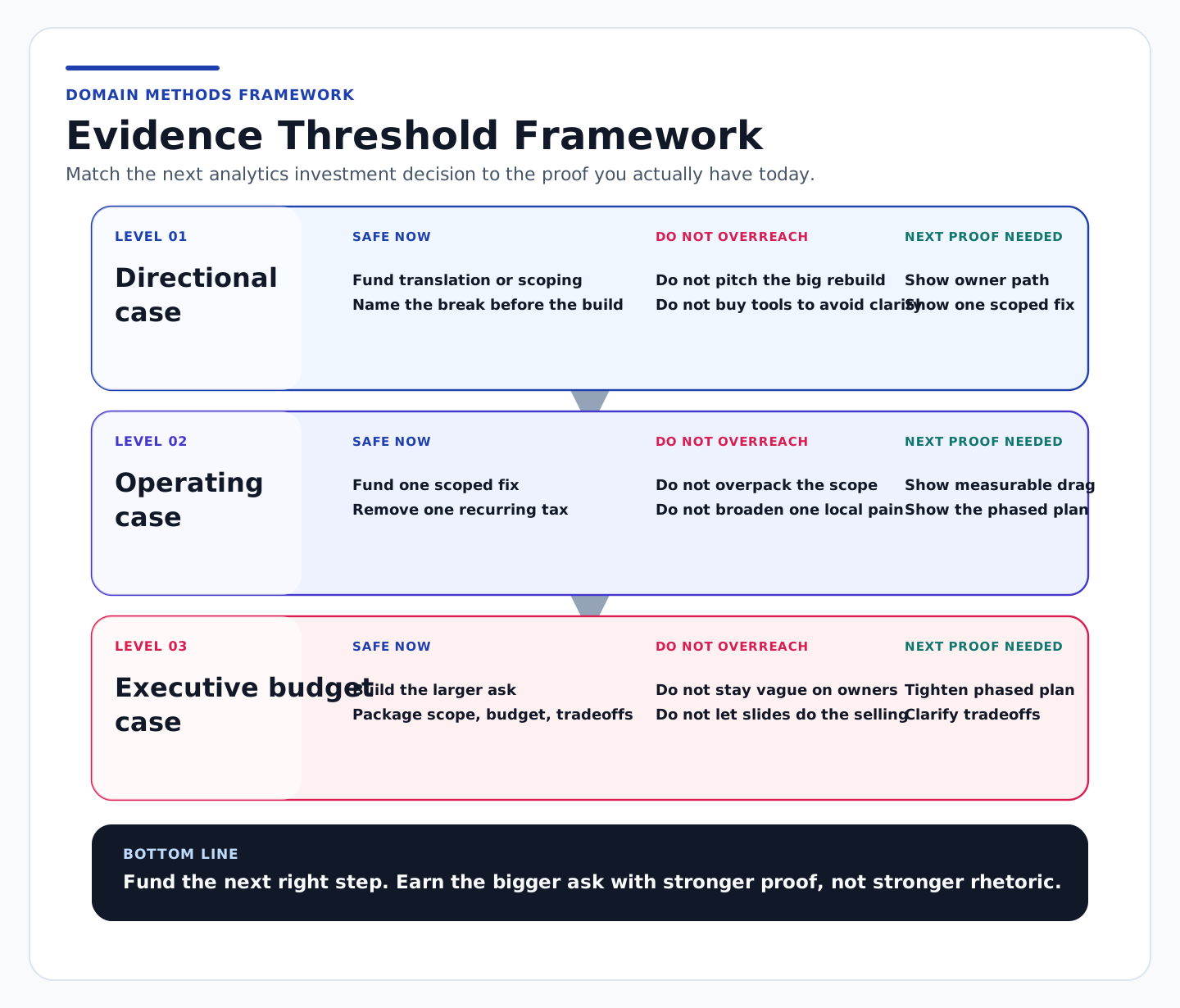
The goal is not to make weak evidence sound fancier.
The goal is to stop the team from overreaching or overwaiting.
If you want the working version for a live planning discussion, download the worksheet here: The Evidence Threshold Worksheet.
Level 1: directional case
A directional case means the problem is real enough to name, but not mature enough to package as a large implementation ask.
This is where a lot of healthy work should start.
You have enough evidence to say:
- the reporting friction is repeated, not random
- the same caveats keep showing up in planning or review meetings
- the manual rescue work is visible to more than one team
- nobody can explain the current metric path cleanly without a side conversation
What you usually do not have yet is a defendable scope, clean ownership path, or proof that the biggest version of the solution is the right one.
That does not mean the team should wait.
It means the safe next move is usually something like:
- a translation sprint
- a definition workshop
- a narrowly scoped instrumentation or reporting audit
- one owner-led cleanup pass on the specific path that keeps breaking the meeting
The mistake at this level is trying to jump straight from “everyone feels the pain” to “therefore approve the bigger project.”
Pain is evidence. It is just not complete evidence.
A directional case is strong enough to justify clarity work. It is not strong enough to justify pretending the clarity work is already done.
Level 2: operating case
An operating case means the team has moved beyond vague pain and can show where the decision is breaking, what repeated cleanup is costing, and what narrower fix would materially improve the workflow.
This is usually the level where the room can justify a real operating move.
Now the proof is more concrete:
- one recurring meeting or workflow is repeatedly slowed by the same reporting defect
- the owner path is visible enough to assign work cleanly
- the business can name what better looks like in plain English
- the team can show the cost of waiting without pretending the ROI math is perfect
This is often the right threshold for:
- a governed definition reset on one metric family
- a focused pipeline or warehouse cleanup on the path that keeps breaking trust
- a translation sprint that ends with one buildable plan instead of another opinion loop
- a scoped implementation slice that removes a known operating tax
This is also the level where some teams get tempted to oversell.
They finally have enough proof to move, so they start packaging the next six months of wish list around the same evidence.
That is how a valid operating case turns into a bloated budget request.
The safer rule is simple: if the evidence is specific to one operating break, keep the ask specific to that operating break.
Level 3: executive-budget case
An executive-budget case means the proof is strong enough that leaders can fund a larger analytics investment without feeling like they are underwriting a vague technical preference.
At this level, the team can usually show:
- the decision problem is repeated and expensive
- the current manual workaround is measurable enough to explain credibly
- the owner path and implementation shape are clear enough to trust
- the business risk of doing nothing is visible beyond one frustrated team
- the proposed investment is clearly tied to an operating outcome, not just a cleaner stack
This is where the later-stage business-case work belongs.
The package can now hold:
- phased investment logic
- budget range and scope
- implementation sequencing
- explicit tradeoffs between doing nothing, doing less, and fixing the problem properly
This is also where The $500K Question becomes a better adjacent move if leadership is still unsure whether this analytics investment is the right bet relative to other growth or operating bets.
The important thing is that the executive-budget case does not start with the deck.
It starts with the evidence being mature enough that the deck is no longer doing all the work by itself.
Evidence threshold decision table
Use this table when the room keeps blending three different asks together.
| Evidence level | Strong enough to justify now | Not strong enough to justify yet | What proof upgrade should come next |
|---|---|---|---|
| Directional case | Translation sprint, definition workshop, focused audit, one-path investigation | Big tooling purchase, broad warehouse rebuild, full headcount pitch | Name the exact decision, owner path, repeated cost, and first narrow fix |
| Operating case | Scoped cleanup, governed metric reset, one workflow fix, one implementation slice | Multi-quarter transformation story built on one local pain point | Show measurable operating drag, implementation shape, and what success changes in the workflow |
| Executive-budget case | Larger implementation ask, phased foundation work, broader analytics investment proposal | Open-ended modernization language with no sequence or owner model | Tighten phased investment logic, risk framing, and leadership-level tradeoffs |
That middle row is the one teams skip most often.
They go from directional frustration straight to executive-budget language.
Then they wonder why the ask feels too big, too fuzzy, or too political.
The two classic mistakes: too much proof and too little proof
The first mistake is demanding too much proof too early.
This usually sounds disciplined.
It is not always disciplined.
Sometimes it is just a way to delay a decision nobody wants to own.
If one metric family keeps derailing the same revenue review, and three teams are already arguing about the definition every month, you probably do not need a polished executive memo before approving the scoping work that fixes the argument.
You need enough proof to justify the next useful move.
The second mistake is moving on too little proof.
This usually sounds energetic.
It is not always progress.
You can tell it is too thin when the proposed solution outruns the evidence:
- the team wants a new platform before they can describe the broken decision
- the ask keeps changing depending on who is in the room
- the ROI story leans on abstract future leverage instead of one visible operating problem
- nobody can say which metric, workflow, or review cycle gets better first
That is when the room should downgrade the ask instead of decorating it.
A thinner ask is not a weaker move if it is the honest move.
What should stay unfunded until the threshold improves
A lot of bad analytics investment comes from funding the wrong thing one meeting too early.
If the evidence is still thin, keep these out of the approval lane for now:
1. Tool-first proposals with no named operating break
If the pitch starts with software categories before it names the broken decision, the proof is usually not mature.
2. Infrastructure language doing the job of business framing
“The stack is brittle” may be true. That still does not tell leadership what decision is slowed, what labor gets wasted, or why the fix matters now.
3. Giant cleanup asks built from one local pain point
One broken board packet does not automatically justify a whole-platform story. Maybe it does. But the evidence needs to show that, not imply it.
4. Headcount asks where the work is still undefined
If the room cannot describe the first 90 days of useful work clearly, it is usually too early to frame the answer as a team-shape decision.
That is exactly where Translate the Ask is useful. The work may be necessary. The framing is just not ready yet.
How to use this framework in one real planning meeting
Keep it simple.
Pick one proposed analytics move. Not five.
Then ask four questions in order:
- What repeated decision or workflow problem are we actually trying to fix?
- What evidence do we already have today that the problem is real?
- Which threshold does that evidence honestly support right now?
- What would count as the next proof upgrade if we want to move one level higher?
That last question matters because it turns uncertainty into an operating plan.
For example:
- if the case is only directional, the next proof upgrade might be one scoped review of meeting rework, caveats, and owner confusion
- if the case is already operating-grade, the next upgrade might be showing the measurable drag across one quarter or one recurring workflow
- if the case is executive-budget-ready, the next upgrade might be sequencing and tradeoff clarity rather than more evidence gathering
This is also the moment to separate “we need to understand the ask” from “we are ready to fund the bigger fix.”
Those are different approvals.
When teams collapse them together, they usually either stall or overspend.
When to use this framework
Use it when:
- leadership agrees the reporting pain is real but keeps asking, “What are you actually proposing?”
- the team can feel the operating tax but is still mixing together translation, cleanup, and bigger implementation language
- somebody wants a larger analytics budget ask before the owner path is clean
- the room is split between “not enough proof” and “we already know enough”
Do not use it as a substitute for the later-stage package.
Once the evidence is already strong, move into a sharper business-case or prioritization lane. That is where The Internal Business Case Builder and The $500K Question become better tools.
Use this framework earlier, when the real job is getting the proof standard right before the wrong ask hardens.
Bottom line
The question is not whether the problem feels important.
The question is what level of proof is enough for the next decision you actually need to make.
A directional case should unlock clarity work. An operating case should unlock a scoped fix. An executive-budget case should unlock a bigger investment ask.
When teams use the same proof standard for all three, they either slow useful work down or greenlight the wrong thing too early.
The cleaner move is to classify the case honestly, fund the next right step, and earn the bigger ask with better evidence instead of better slide design.
Download the Evidence Threshold Worksheet (PDF)
Use this lightweight worksheet to classify one analytics ask as directional, operating-case, or executive-budget-ready before the room funds the wrong version of the fix.
Instant download. No email required.
Want future posts like this in your inbox?
This form signs you up for the newsletter. It does not unlock the download above.
Download the Evidence Threshold Worksheet (PDF)
A lightweight worksheet for classifying an analytics ask as directional, operating-case, or executive-budget-ready before the wrong project gets funded.
DownloadIf the problem is real but the ask is still underspecified
Translate the Ask
Use Translate the Ask when leaders know the current reporting or metric logic is slowing decisions, but the next move still needs scope, owner clarity, and business framing.
See the translation sprintIf the framework says the evidence already supports implementation work
Data Foundation
Use Data Foundation when the proof already shows the real blocker is weak definitions, warehouse debt, system-of-record drift, or fragile reporting logic that now needs to be fixed properly.
See Data FoundationSee It in Action
Common questions about evidence thresholds for analytics investments
What is the evidence threshold framework for analytics investments?
How is this different from the Internal Business Case Builder?
What usually goes wrong when teams skip this step?
What should stay unfunded until the threshold improves?

About the author
Jason B. Hart
Founder & Principal Consultant
Helps mid-size SaaS companies turn messy marketing and revenue data into decisions leaders trust.